Series Summary — KC VICE — June 2026
Dear Scenic Rim
Four parts. Hundreds of pages of planning documents, budget papers, wind data, flood assessments, species reports, and government agency disclosures. Here’s what it all adds up to — in plain language, without the PR gloss.
By KC | KC VICE | June 2026 | kcvice.com.au
Let me start with what this series is not. It’s not a campaign against waste management. It’s not a knee-jerk NIMBY piece. And it’s not an attack on any company for trying to build a legal facility inside a legally declared industrial precinct.
What it is, is a flat refusal to accept that the conversation around this project has been complete. Because it hasn’t been. Not by a long shot.
So here’s the summary. Blunt. No footnotes needed — we’ve already done four parts of those.
Chapter One
The Art of Being Asked Nothing
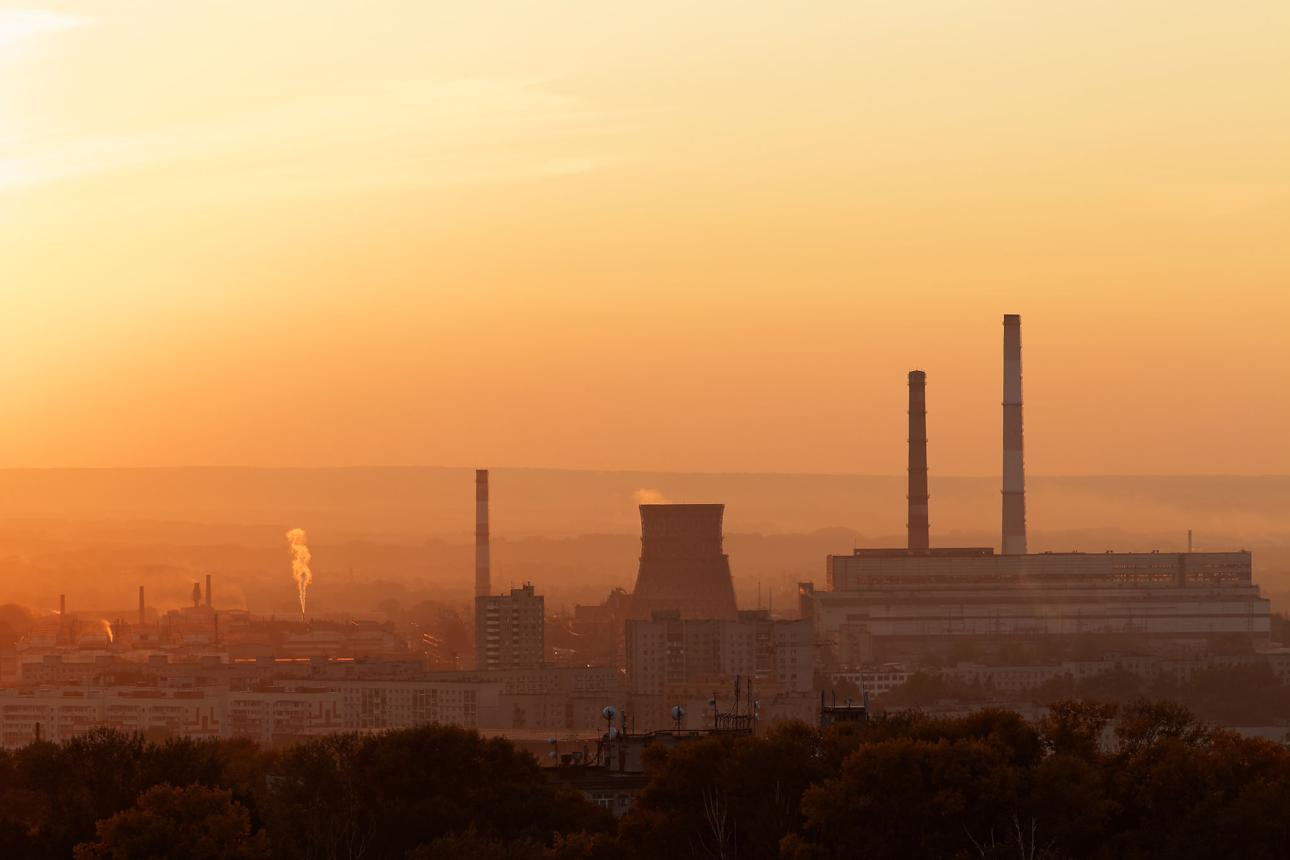
Cleanaway wants to build what is, functionally, the largest waste incinerator in Queensland on a 62-hectare site inside the Bromelton State Development Area. They’ve dressed it up with a name that sounds like a renewable energy startup — the Bromelton Energy and Resource Centre — and they’ve written the words “sustainable resource recovery” so many times in their communications that it’s practically a drinking game.
✦ What the brochure says
“Innovative energy-from-waste technology transforming residual materials into clean power for 105,000 homes.”
✦ What it actually is
A furnace burning 760,000 tonnes of other people’s rubbish every year. Most of it not from the Scenic Rim. None of it going away — just changing form into ash that has to go somewhere else.
Now here’s the part that should bother you regardless of where you stand on the facility itself. The Scenic Rim Regional Council — the people you elected to represent your interests — cannot veto this. They can write a letter. They can submit advisory notes. Then they sit down and wait like everyone else while the Coordinator-General makes the actual call.
The state government declared the Bromelton SDA in 2008 specifically so that “difficult-to-locate” industries could bypass the usual local planning process. That’s not a conspiracy theory — that’s the stated purpose of the zone, on the Queensland Government’s own website. Your council is a referral agency. An advisory body. A letterbox.
How’s that democratic accountability working out for you?
Chapter Two
The Housing Trick Nobody Explained
While all of this was happening, the state government has also been quietly mandating that the Scenic Rim absorb a significant chunk of South East Queensland’s population overflow. Thousands of new dwellings. Densities of 20 to 30 per hectare. Twenty percent social and affordable housing requirements baked in by law.
Beaudesert — designated the Principal Rural Activity Centre — gets the bulk of it. Which means the state’s answer to “where do we put all the people?” is: right next to the big industrial waste hub. On purpose.
OFFICIAL MEMO — SATIRICAL
To: Scenic Rim Residents
From: Queensland State Government Planning Division
Re: Your region’s exciting future
We’re pleased to advise that we’ll be placing a 760,000-tonne annual industrial waste combustion facility to the west of Beaudesert, while simultaneously mandating the highest residential density growth in the region’s history immediately adjacent to it. We appreciate your feedback but note that the relevant decisions have already been made at a level above your council’s authority. Please enjoy your ECO Destination Certification while it lasts.
— This memo is satirical. The planning decisions it describes are not.
And when the local council pointed out it didn’t have the capital budget to build the infrastructure that mandatory growth requires? The state went around them. A $7.3 million direct injection from the Residential Activation Fund. Three hundred and eighty-four lots unlocked at Golf Links Park Estate. No council vote required. Timeline maintained.
You have to admire the efficiency, if nothing else.
Chapter Three
Your Rates Bill Is Not Your Friend
The Scenic Rim Regional Council is managing a $119.6 million budget across 4,200 square kilometres of flood-prone rural terrain. Their capital works program for roads is $14.1 million. Most of it goes to maintaining what already exists, not building new things.
People keep telling you that more residents means lower rates. More ratepayers sharing the load. It’s a nice idea. It’s also not how municipal finance works in practice when the growth is fast, the infrastructure is new, and the industrial traffic is about to add nearly 500 heavy vehicle movements per day to roads that are budgeted for basic patch-and-seal maintenance.
The maths, plainly stated
$400,000 — Bromelton area road maintenance budget this cycle.
~472 — daily heavy vehicle movements the BERC would add if approved.
$0 — the amount Cleanaway’s trucks contribute to the road network they’ll use hardest.
Infrastructure lifecycle costs from rapid development consistently outpace the revenue from new ratepayers. That’s not opinion. That’s a pattern documented in municipal finance research across Australia. The rate rises come. They always come. They just come a few years after everyone’s already moved in and the developer is long gone.
Chapter Four
The Wind Doesn’t Check the Consultation List
South East Queensland has two dominant seasonal wind patterns. Winter brings west and south-westerly winds. Summer flips to south-easterlies. This is not contested meteorology — it’s in the Bureau of Meteorology’s published data and it’s been consistent for decades.
In winter, those prevailing winds push directly east from the Bromelton site toward Beaudesert and Gleneagle. Six kilometres of air between the stack and the town centre.
In summer, the south-easterlies push drift north-west toward Allenview and up through the Flinders Peak and Peak Crossing corridor.
During autumn and spring, the wind is variable. Which means it points at everyone, on rotation, depending on the time of day.
Here’s what I want you to sit with. The communities in the summer drift path — Allenview, Peak Crossing — are not in Cleanaway’s consultation framing. They’re not named prominently in planning documents. They haven’t been showing up to Beaudesert information sessions because nobody told them they might want to.
“The wind doesn’t check who’s on the consultation mailing list before it blows. The residents of Allenview and the Peak Crossing corridor deserve to know they appear on this map. Right now, most of them don’t.”
And before someone says “but the emissions are regulated” — yes, they’re designed to meet standards at the stack. The question that doesn’t get asked loudly enough is what the cumulative ground-level concentration looks like six kilometres downwind during a still winter morning, season after season, across the operational life of a facility that’s supposed to run for decades.
That’s what dispersion modelling is for. Has anyone seen Cleanaway’s seasonal dispersion modelling broken down by named community? Because I’d love to read it.
Chapter Five
The Part That Made My Jaw Drop
Here’s the one that doesn’t get nearly enough airtime.
Seqwater — the government agency that manages South East Queensland’s bulk water supply — has published documentation stating, in plain language, that the majority of the Bromelton SDA sits within the Water Resource Catchment and Water Supply Buffer Area for the Logan River drinking water supply.
The same zone where Cleanaway wants to build a facility that generates, annually: roughly 22,800 to 38,000 tonnes of hazardous fly ash loaded with heavy metals, dioxins and furans. Between 152,000 and 190,000 tonnes of alkaline bottom ash. And stormwater runoff from external hardstands handling 760,000 tonnes of residual urban waste.
✦ The engineering assurance
“Zero-liquid-discharge system. Double-lined containment cells. 110% bunding compliance. Redundant engineering layers.”
✦ The actual question
What happens to all of that when the Logan River does what it does periodically — floods? What happens to the containment bunding when it’s designed for “unprecedented rainfall” and Queensland delivers exactly that?
The engineering safeguards are designed to make failure unlikely. That’s good engineering. But “unlikely” and “impossible” are different words. And in a drinking water catchment buffer zone, the consequence side of the risk equation is not just an environmental incident. It’s the water supply for a significant portion of South East Queensland.
Nobody is accusing Cleanaway of planning to poison the Logan River. That’s not the point. The point is that the question of what happens if containment fails — in this specific location, in this specific catchment — should be answered in full public view before the Coordinator-General signs anything.
Is it? Has anyone checked?
Chapter Six
The Species That Filed No Submissions
The Australian Lungfish has been on this planet, essentially unchanged, for over 100 million years. It survived whatever killed the dinosaurs. It made it through ice ages, continental drift, and the entire history of human civilisation.
It’s currently listed as vulnerable under the EPBC Act because we’ve managed to stress its breeding habitat enough in a few decades that the federal government had to formally step in.
The Mary River Cod is considered functionally extinct in the Albert-Logan River system. Not declining. Not rare. Functionally gone from the waterway that drains the Beaudesert basin. There are active government-funded restocking programs reintroducing fingerlings into that system right now.
Neither species got to put in a submission. Neither species gets a seat at the community drop-in session. Neither species has a lobbyist. What they have is an ecosystem that’s already under pressure, a recovery program that’s already expensive and fragile, and a catchment that’s about to host a 760,000-tonne-a-year industrial combustion facility upstream.
Make of that what you will.
Chapter Seven
Kooralbyn — The Town That Didn’t Know
9.4 kilometres. That’s the straight-line distance from the proposed BERC site to Kooralbyn. Closer than Beaudesert. Closer than Gleneagle. The resort-residential community built on quiet, lifestyle, and distance from exactly this kind of industrial development — and it’s the geographically closest named community to the stack.
Most people in Kooralbyn don’t know this. Most people debating the BERC don’t know this. It wasn’t in Cleanaway’s consultation framing. It didn’t make the news. It showed up when someone — that’d be me — plotted the coordinates on a map and ran the numbers.
If you own property in Kooralbyn, or you’re considering buying there, you now know something the market hasn’t fully priced in yet. What you do with that information is up to you.
The Questions That Should Have Already Been Answered
I’ve written four parts of documented, sourced, legally defensible analysis. I’ve been measured. I’ve caveated where I needed to. I’ve separated what’s confirmed from what’s a question from what’s a risk assessment.
Now I’m going to just say what I actually think.
This region is being managed — not governed, managed — in a way that consistently prioritises state-level economic and planning objectives over the interests of the people who actually live here. The BERC is being processed through a mechanism that was specifically designed to minimise community veto power. The housing targets are being enforced through a mechanism that goes around the council when the council’s capacity runs out. The rates burden that comes with all of this lands on the same people who had the least say in any of it.
And the information? It’s all public. It’s all there. It’s just spread across planning portals, agency websites, budget documents, and scientific papers that nobody has time to read because they’re busy running farms, raising kids, and paying rates that keep going up.
That’s not incompetence. That’s a system working exactly as designed. The question is whether enough people decide to engage with it before the decisions are locked in.
Here’s what I want answered. Publicly. On the record. Before any decision is made.
?Has Cleanaway’s EIS dispersion modelling been broken down seasonally, by named community, and made publicly available in plain language — not just as technical appendices that require a specialist to decode?
?What is Seqwater’s formal, documented assessment of the contamination risk profile for the Logan River Water Supply Buffer Area, and why isn’t that assessment headline news?
?Where does the fly ash go, who operates the receiving facility, what is the containment standard, and who holds the long-term liability if that facility ever fails?
?Why are Allenview and the Peak Crossing corridor not named in any consultation material when they sit in the summer drift path from this facility?
?What does the road degradation timeline look like when you add 472 daily heavy vehicle movements to a network budgeted for $400,000 of maintenance — and who pays for the gap?
?Has any independent property impact study been commissioned for Kooralbyn specifically, given it’s the closest named community to the site and the one most exposed to industrial identity shift?
?What are the post-operational monitoring and environmental liability obligations if this facility is eventually decommissioned — and what’s the bonding requirement that ensures those obligations are met regardless of Cleanaway’s future corporate structure?
So Here’s What You Do
A CTA for people who are done watching this happen from the sideline
I’m not telling you what to think about the BERC. That’s your call, and it’s a genuinely complex one. Waste management is a real problem. Energy infrastructure is a real need. Industrial development creates real jobs.
But complexity is not the same as inevitability. And “it’s complicated” is not a reason to stay quiet while decisions that will affect your property, your water, your rates, and your community’s identity for decades get made in a process specifically designed to limit your ability to stop them.
So here’s what engagement actually looks like. Not a Facebook comment. Actual engagement.
- ►Go to statedevelopment.qld.gov.au and find the BERC project listing. Read the public submission process. There is one. Use it. A submission doesn’t have to be a legal document — it has to be on the record.
- ►Contact your state MP — the electorate is Scenic Rim, served by Jon Krause. Write a letter or email. Ask him specifically what the government’s position is on the Seqwater catchment overlay and whether a formal drinking water risk assessment has been publicly released.
- ►If you’re a Kooralbyn property owner, talk to a professional valuer now — not after the EIS is approved. Get an independent assessment of your position while there’s still a market conversation to be had.
- ►If you live in Allenview or Peak Crossing and you haven’t heard anything about this project — that’s exactly the problem. You’re in the summer drift path. You should be asking why nobody told you.
- ►Share this series. Not because I need the traffic. Because the people making decisions in this process count eyeballs and raised voices when they assess whether the community is paying attention. More voices on the record means a harder decision to rubber-stamp quietly.
- ►Go to Cleanaway’s community information sessions and ask questions that aren’t on their FAQ sheet. Bring the questions from this series. Make them answer on the record in a public setting.
- ►If you’re a journalist or a local councillor reading this — the Seqwater catchment overlap story is sitting there waiting. It’s sourced, it’s documented, and nobody has run it. That’s the front page, not the follow-up.
The Coordinator-General will make a decision. That’s how the system works. But the quality and completeness of the information that goes into that decision depends entirely on how loudly the community insists on it being complete.
Right now, it’s not complete. That’s what this series has been about.
— KC | KC VICE | kcvice.com.au
This summary is a satirical editorial reflection on four documented investigative articles. The satirical framing — including the mock memo — is clearly identified as such. All factual claims in this piece are supported by primary source documentation detailed in Parts 1 through 4. Nothing in this article constitutes an allegation of unlawful conduct by any party. The questions raised are editorial in nature and reflect publicly available information about the BERC assessment process.
Primary source index: Parts 1–4 of The Squeeze series (kcvice.com.au). Queensland Government Office of the Coordinator-General (statedevelopment.qld.gov.au). Seqwater planning documentation (seqwater.com.au). Bureau of Meteorology wind data (bom.gov.au). Scenic Rim Regional Council 2025-2026 Budget. EPBC Act species listings — DCCEEW. Cleanaway BERC project hub (cleanaway.com.au/bromelton-energy-and-resource-centre).
© KC VICE — kcvice.com.au — Published under public interest editorial mandate. Not financial, legal or environmental advice.